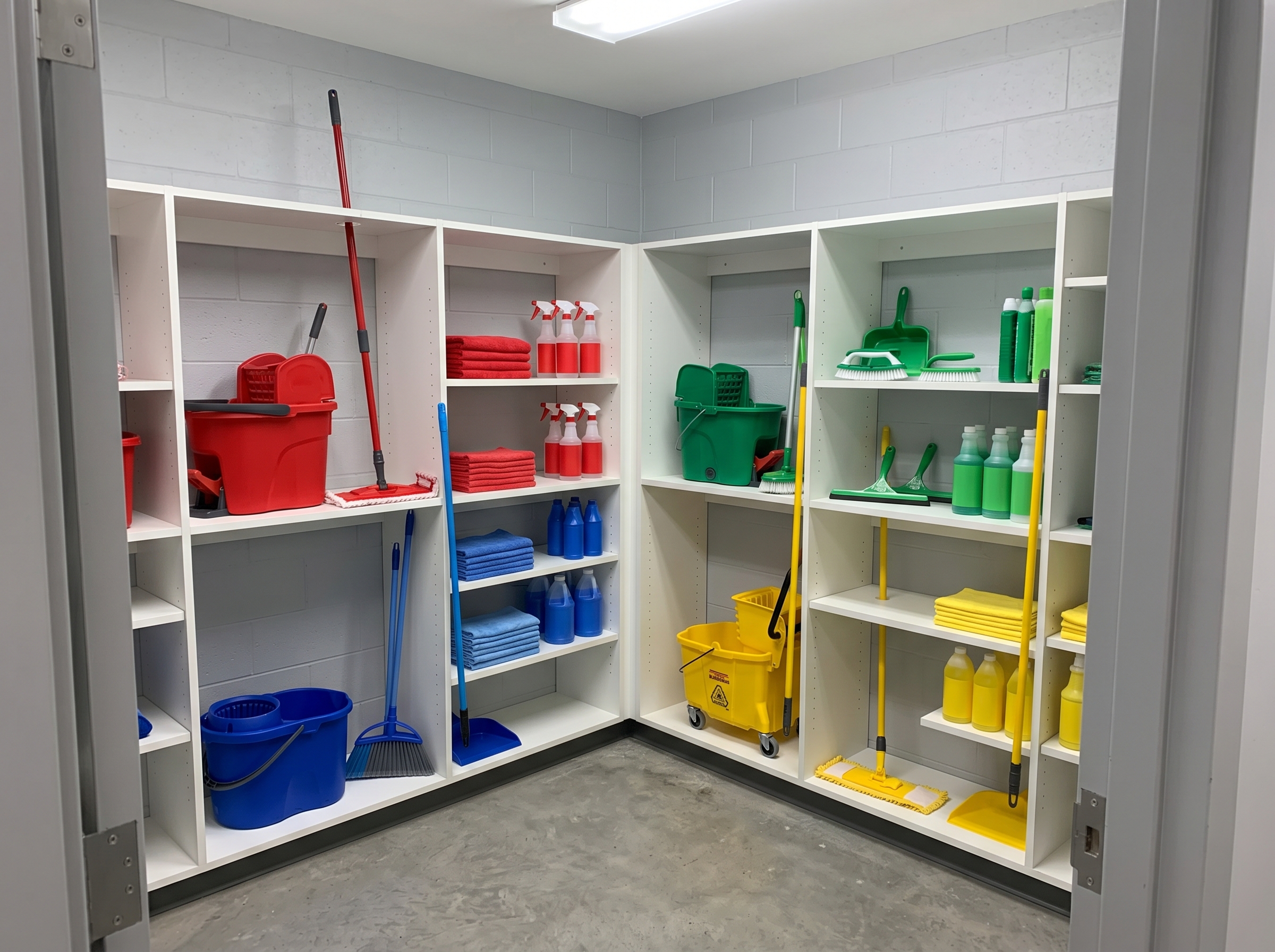
Color-coded cleaning assigns a specific color, usually red, blue, green or yellow, to the mops, cloths, buckets and bins used in each zone of a building, so the same tool never travels from a toilet to a kitchen or a patient ward to a public corridor. For hospitals, schools, gyms and facility management companies across the UAE, it is one of the simplest, lowest-cost ways to cut cross-contamination risk, satisfy infection-control audits and give a multilingual cleaning team a system they can follow on sight, no manual required. This guide covers the standard color code, which UAE facilities benefit most, and exactly what equipment you need to get the system running this week.
In this article
- What is color-coded cleaning and why does it matter?
- What are the standard cleaning color codes?
- Which UAE facilities should be using this system?
- How do you set up a color-coded system in 5 steps?
- Is color-coded cleaning mandatory in the UAE?
- FAQ
What Is Color-Coded Cleaning and Why Does It Matter?
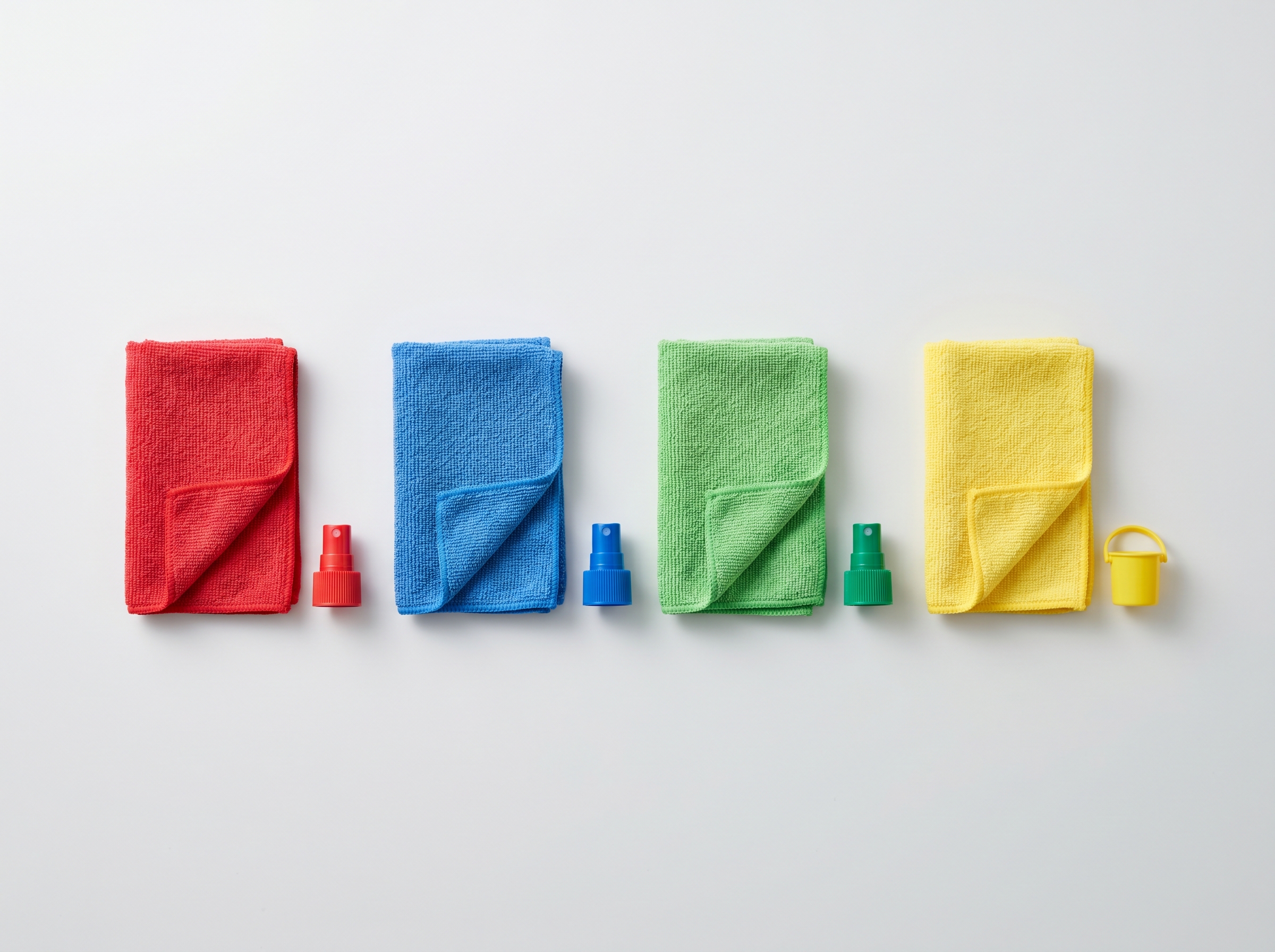
Color-coded cleaning is a system where every piece of cleaning equipment, mops, cloths, buckets, gloves and bins, is assigned a fixed color tied to a specific zone of risk. The approach was formalized in the late 1990s by the British Institute of Cleaning Science (BICSc) and has since become the de facto international standard used by hospitals, hotels, schools and cleaning contractors worldwide, including a growing number of UAE facilities.
The logic is simple. Relying on staff to remember which cloth was "only used for the bathroom this morning" fails the moment a shift changes, a new hire starts, or a team is rushing through a busy site. Color removes the guesswork. A red mop only ever touches a washroom floor. A green cloth only ever touches a kitchen counter. There is nothing to memorize and nothing to mistranslate, which matters in a market like the UAE where cleaning teams are often multinational and multilingual.
What Are the Standard Cleaning Color Codes?
Most facilities only need four colors to cover the major contamination risks in a building. Here is the standard breakdown used by hospitals and commercial cleaning teams worldwide:
| Color | Zone | Risk level | Typical areas |
|---|---|---|---|
| Red | Washrooms and sanitary areas | High | Toilets, urinals, bathroom floors and sinks |
| Blue | General, low-risk areas | Low | Offices, corridors, reception areas, waiting rooms |
| Green | Kitchens and catering | High (food safety) | Kitchens, pantries, canteens, food prep counters |
| Yellow | Clinical and isolation areas | High (infection control) | Patient wards, isolation rooms, clinical surfaces |
Some facilities add a fifth color for a specific need, such as a dedicated color for gym equipment wipe-down stations or outdoor areas. Start with the four standard colors above and only expand if a clear gap shows up in your own site.
Which UAE Facilities Should Be Using This System?
Color-coded cleaning earns its cost back fastest in any building with more than one type of risk zone under one roof. In the UAE, that includes:
- Hospitals and clinics, where DHA and MOH-regulated facilities are increasingly expected to demonstrate a documented infection-control system during audits.
- Schools and nurseries, where young children, shared washrooms and food service areas all sit close together.
- Gyms and fitness centers, where equipment surfaces, locker rooms and juice bars each carry different contamination risks.
- Facility management companies and cleaning contractors, who manage multiple client sites and need one consistent, auditable system their staff can follow regardless of which building they are in that day.
How Do You Set Up a Color-Coded System in 5 Steps?
Step 1: Map your zones and assign colors. Walk your facility and group every area into one of the four standard zones above. Most sites need nothing more complex than this.
Step 2: Source color-matched equipment. Replace mixed or unmarked equipment with bins, mop bucket trolleys and mops in the matching color for each zone.
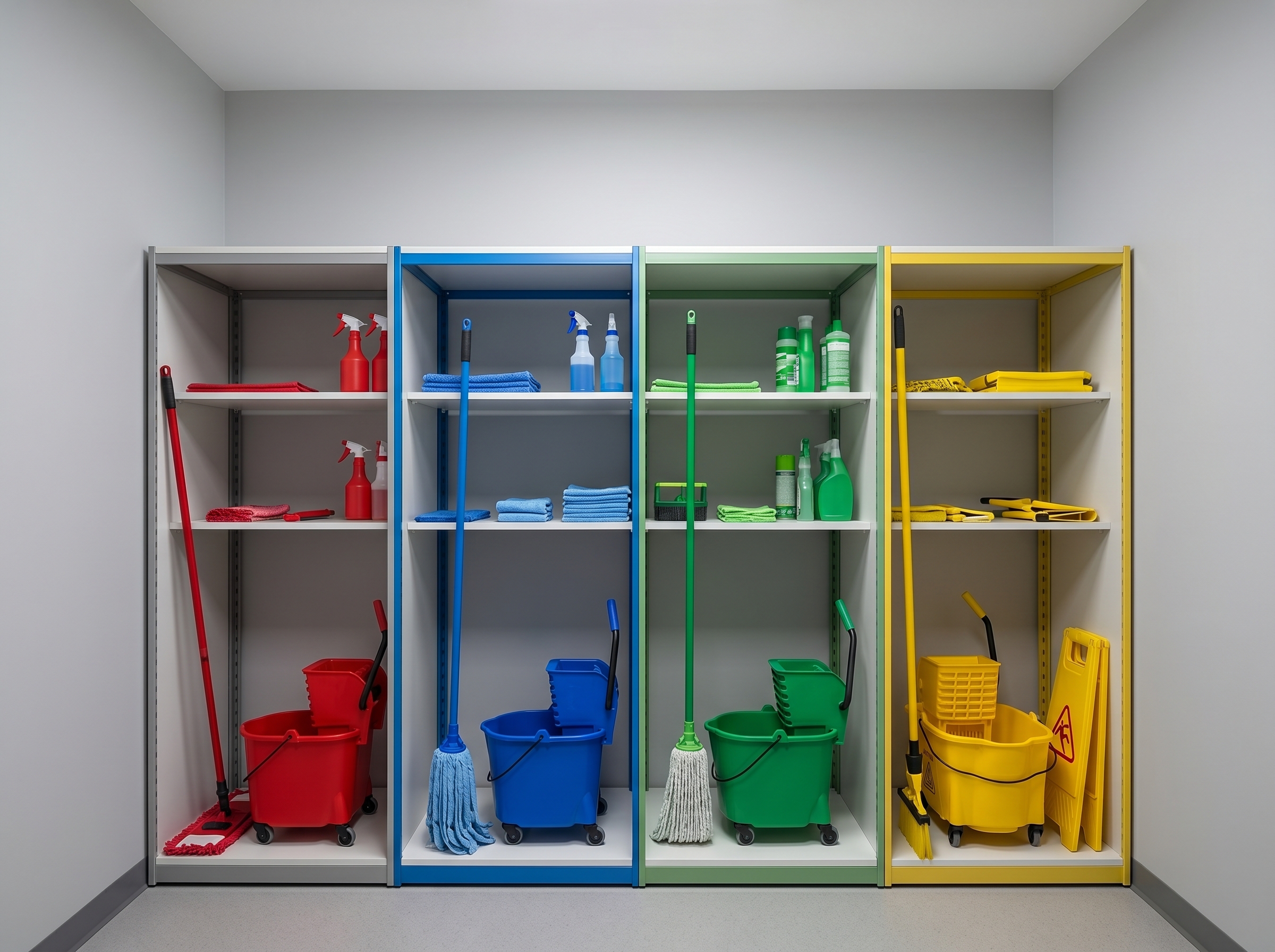
Step 3: Label storage and store by color. Dedicate a shelf or section of the cleaning store to each color so restocking and end-of-shift checks take seconds.
Step 4: Train staff visually. Because the system runs on color rather than written instructions, a single laminated chart on the storeroom wall does most of the training work, regardless of which language your team speaks day to day.
Step 5: Audit regularly. Colors fade and equipment gets swapped between zones if nobody checks. A short weekly walk-through is usually enough to keep the system honest.
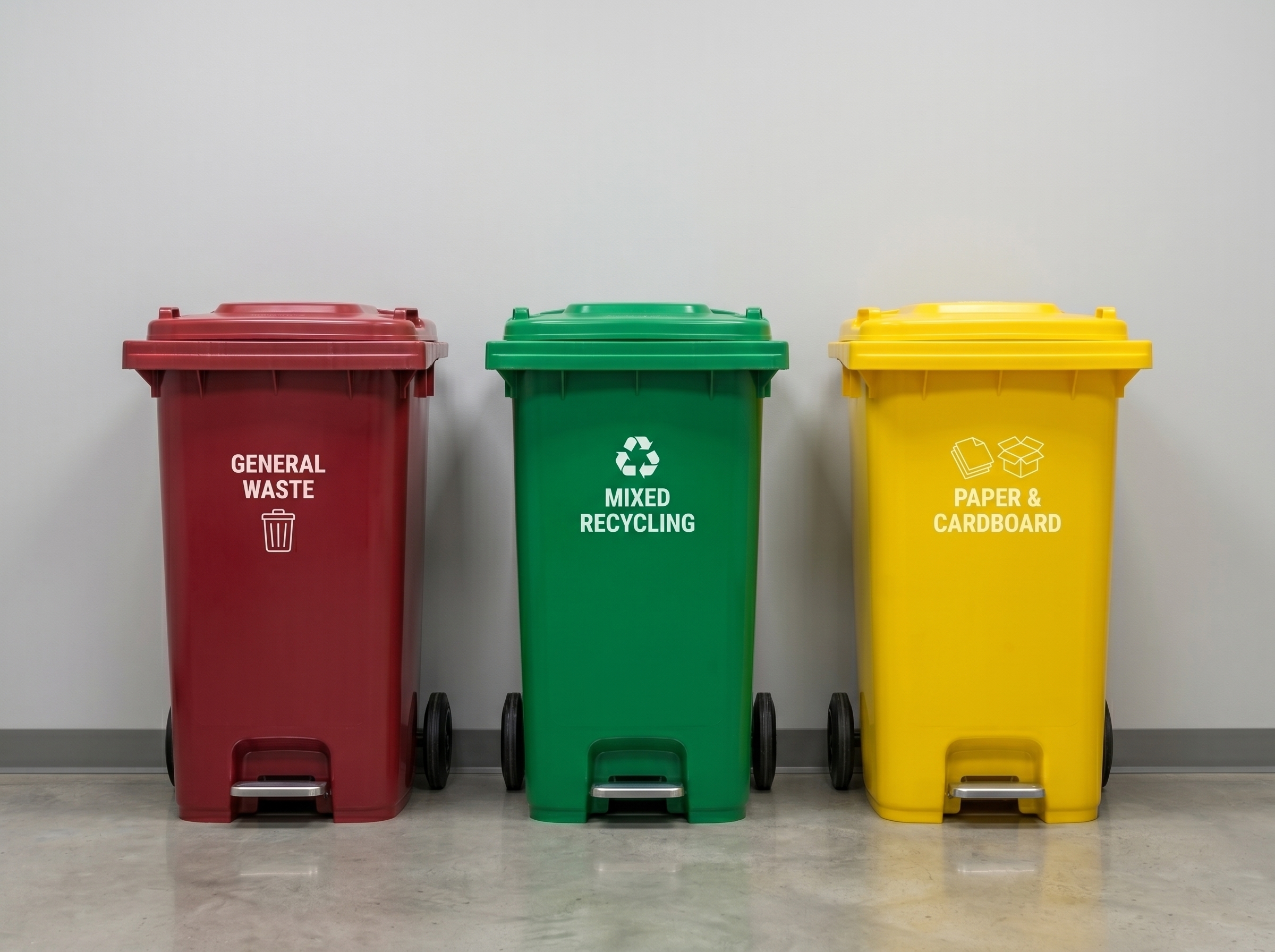
Hands-free waste segregation in red, green or yellow, built for daily commercial use.
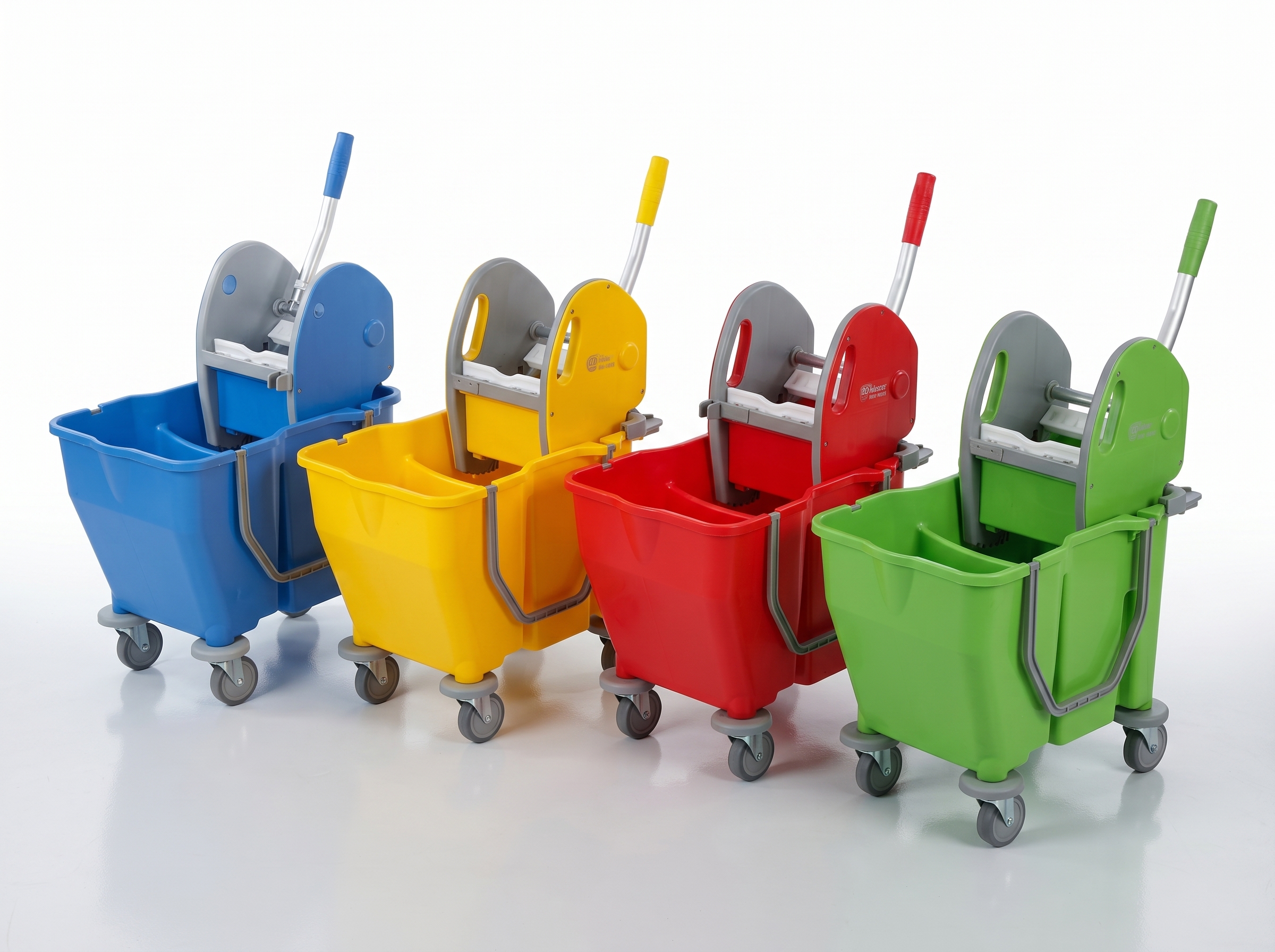
A partitioned clean and dirty water system available in all four standard colors, the foundation of a color-coded mopping routine.
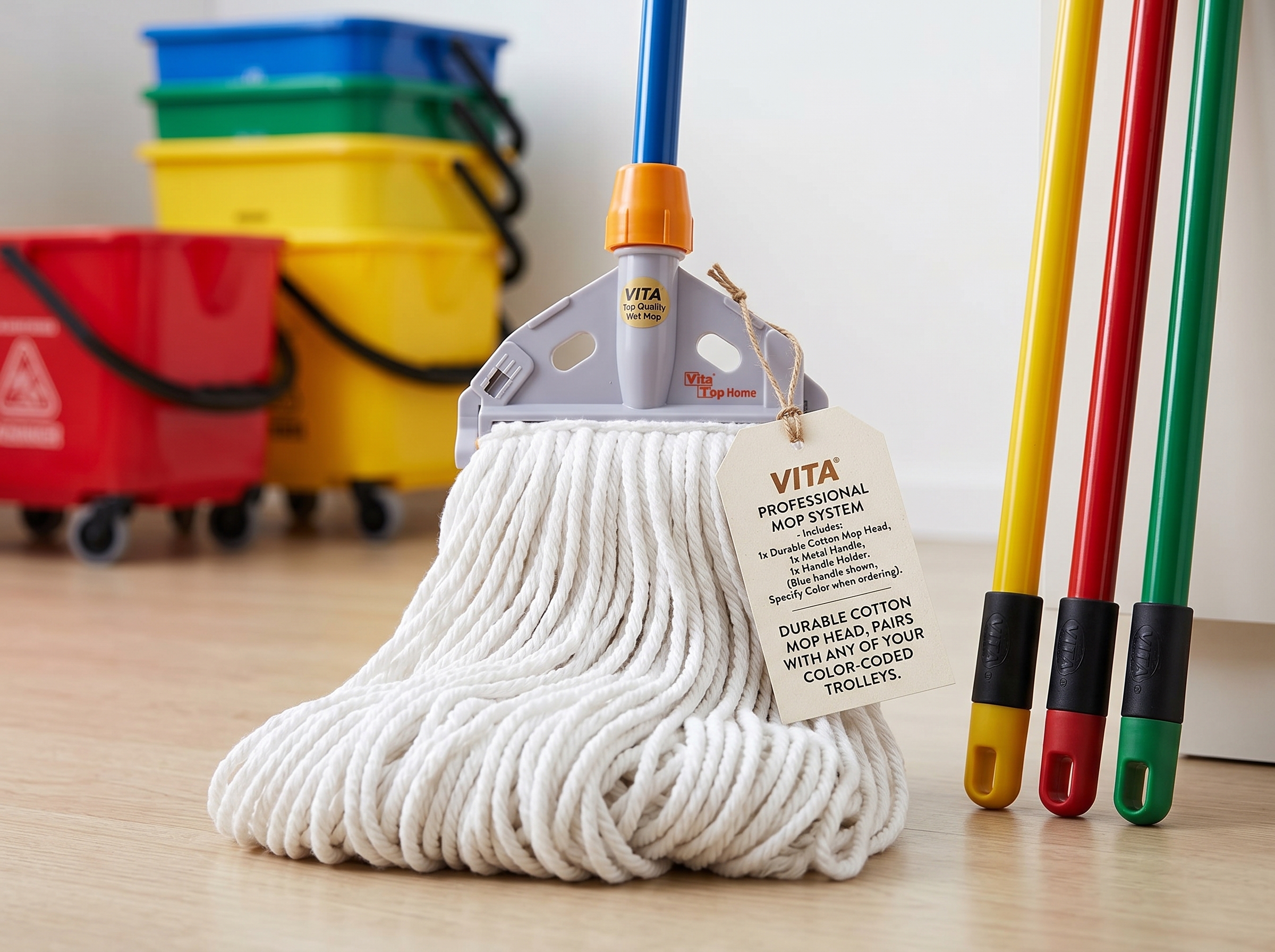
A durable cotton mop head that pairs with any of your color-coded trolleys, sold with a metal handle and holder.
Frequently Asked Questions
How many colors do I actually need to start?
Four: red for washrooms, blue for general areas, green for kitchens and yellow for clinical or high-risk zones. Add a fifth color later only if a specific gap appears, such as gym equipment stations.
Can I just use colored tape on my existing mops instead of buying new equipment?
Tape and stickers work as a short-term fix, but they peel off and fade quickly in daily commercial use. Pre-colored bins, mop heads and bucket trolleys hold up longer and are easier for an inspector or auditor to verify at a glance.
What color should I use for kitchens and pantries?
Green is the standard color for kitchens, pantries and any food preparation or service area under the system most UAE facilities follow.
How do I train a multilingual cleaning team on this system?
Color coding is built for exactly this. Since it relies on color rather than written instructions, it works across language barriers. Pair it with a simple laminated color chart in the cleaning store and a short visual walkthrough during onboarding.
Where can I buy color-coded cleaning equipment in the UAE?
Daitona General Trading and our private label, Hygiene System, stock color-coded mop bucket trolleys, pedal bins and mops in red, yellow, blue and green, sourced from manufacturers in Italy and Taiwan, with bulk pricing available for facility management companies and cleaning contractors.
Ready to Set Up Your Color-Coded System?
Shop color-coded mop trolleys, pedal bins and mops, all available in red, yellow, blue and green, with bulk pricing for facility teams.
Shop Color-Coded Equipment →