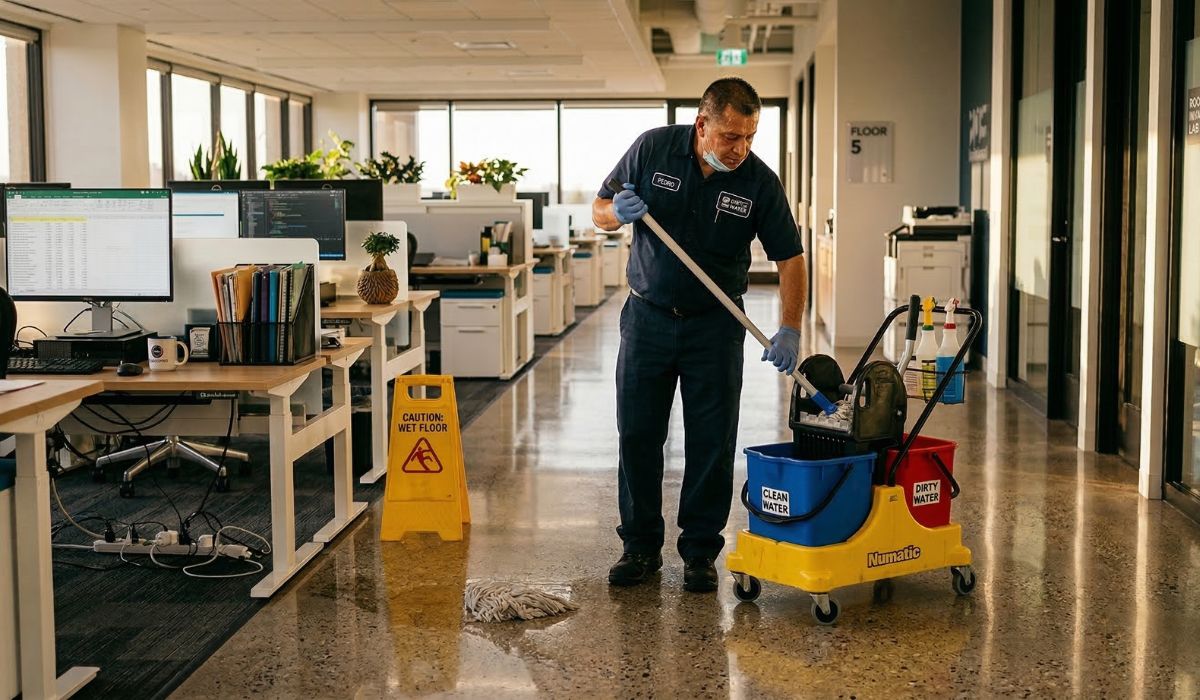
In the world of facility management, “clean” is often used as a visual descriptor. However, true hygiene is a technical discipline. For professionals managing high-traffic environments in the UAE, the difference between a tidy space and a safe one lies in the application of science.
At Daitona General Trading LLC, we believe that understanding the “why” behind your cleaning protocols is the key to operational excellence. Here is a breakdown of the scientific principles that define professional-grade facility maintenance.
The Molecular Logic: Navigating the pH Scale
Successful cleaning is essentially a series of controlled chemical reactions. To protect your facility’s surfaces and maximise labour efficiency, your team must understand the pH scale:
- Targeting Organic Soils: Greasy residues, proteins, and oils require Alkaline detergents (pH 8–14). These solutions emulsify fats, allowing them to be rinsed away easily.
- Dissolving Mineral Deposits: Hard water stains and limescale common in our region are inorganic. These require Acidic cleaners (pH 0–6) to break the mineral bonds.
- Surface Preservation: For daily maintenance on delicate materials like natural stone or polished wood, pH-Neutral cleaners are mandatory to prevent etching or dulling the finish over time.
The Physics of Microfibre: Trapping vs. Spreading
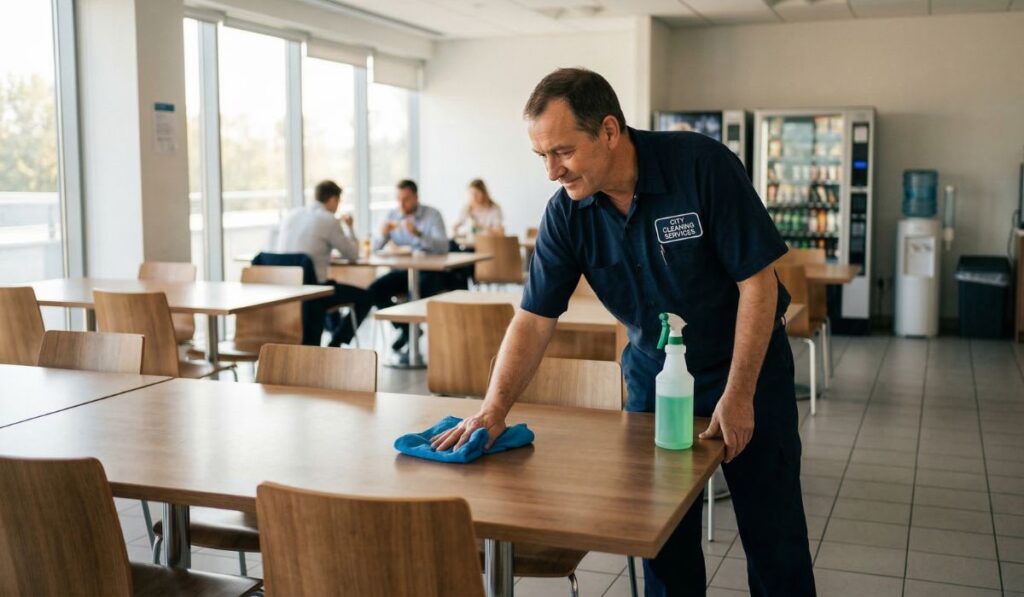
While traditional cotton mops rely on absorption, the science of Microfibre relies on physical entrapment. Each strand is split into microscopic hooks that physically scrape contaminants off a surface.
- The Advantage: Microfibre creates a mechanical bond with dust and microbes, holding them within the cloth until it is laundered.
- The Result: You use significantly less water and fewer chemicals, making it a more sustainable and cost-effective choice for large-scale operations.
Zonal Integrity: The Colour-Coded Defence
The most significant threat in any facility is not visible dirt; it is the invisible migration of pathogens. Zonal Cleaning uses colour-coded tools to create a physical barrier between different risk environments.
| Colour | Designation | Rationale |
|---|---|---|
| Red | High-Risk (Toilets) | Prevents the spread of enteric bacteria to other areas. |
| Yellow | Restroom Surfaces | Dedicated to sinks and mirrors to maintain specialised hygiene. |
| Blue | General Areas | Used for desks and common spaces to ensure a neutral environment. |
| Green | Food Contact | Ensures food safety standards are met without chemical crossover. |
The Hierarchy of Decontamination
Facility managers often use the terms clean, sanitise, and disinfect interchangeably, but they represent three distinct levels of microbial reduction:
- Cleaning (The Foundation): The physical removal of debris. Without this step, disinfectants cannot reach the surface to work effectively.
- Sanitising (The Standard): Reducing the microbial load to a level safe for human contact, common in food-preparation areas.
- Disinfecting (The Shield): The highest level of control, using specific dwell times to kill pathogens. This is critical for high-touch points like elevator panels and door hardware.
The Daitona Advantage: Efficiency by Design
In facility management, labour typically accounts for the largest portion of the budget. Investing in ergonomic, professional-grade equipment is not just about durability; it is about reducing motion waste.
Our range at Daitona, from high-capacity janitorial trolleys to specialised floor machines, is engineered to help your staff cover more square footage with less physical strain and higher precision.
Elevate Your Facility Standards
Professional cleaning is a strategic investment in the health of your occupants and the longevity of your assets. By combining the right scientific approach with Daitona’s premium supplies, you can transform your maintenance routine into a world-class hygiene programme.
Discover our full range of professional janitorial supplies and cleaning equipment at daitona.com/product-catalogue, or contact our team to discuss your facility’s requirements.